Upon invitation from our Chinese colleagues and partners, AIOLIA participated in multiple events in China in August 2026.
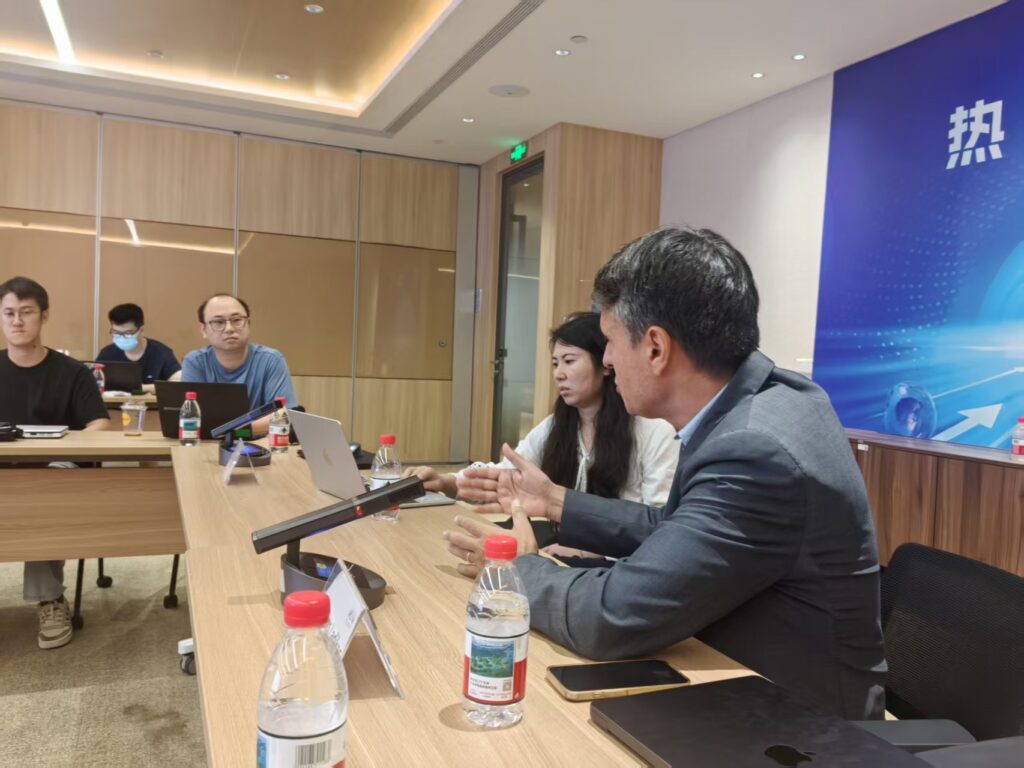
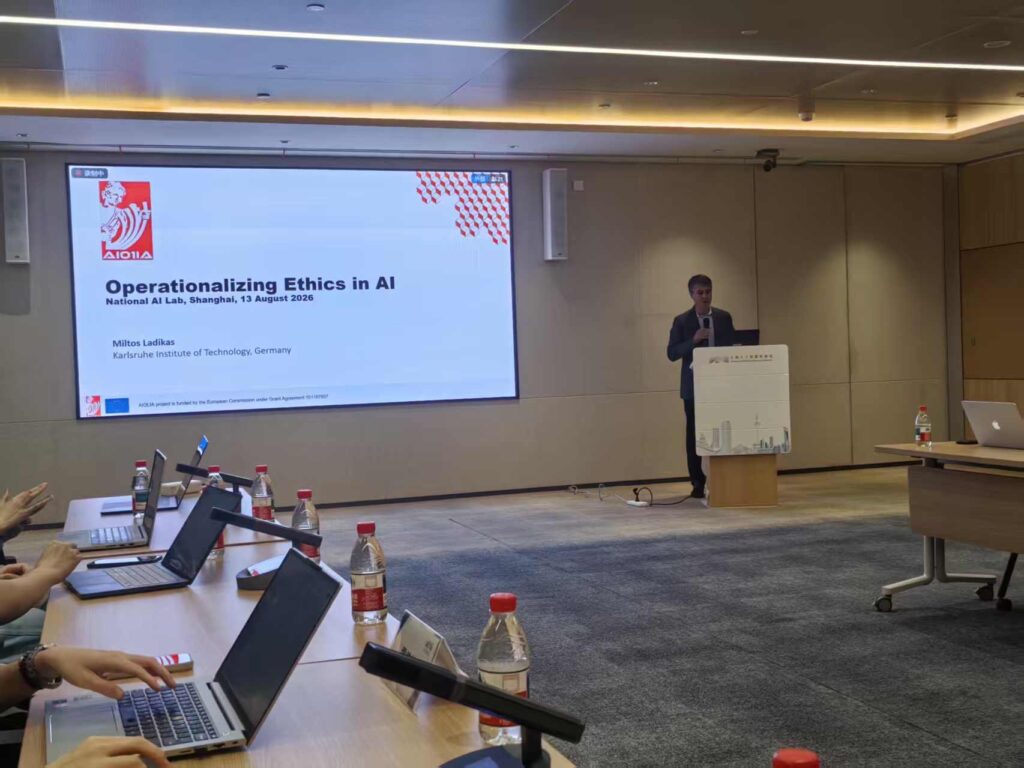
On 13 August, Miltos Ladikas (KIT) gave a talk on AIOLIA and its model of operationalising ethics at the National Artificial Intelligence Laboratory in Shanghai. The talk was attended by AI designers, industry developers and regulatory experts. It was followed by an expert round table discussion on international collaborations in AI governance. The Ethics Readiness Levels tool was discussed extensively, as well as the Chinese debates on a new basic AI law. Suggestions were made for further collaborations on global public perception of AI developments and on social experimentation with AI agents.
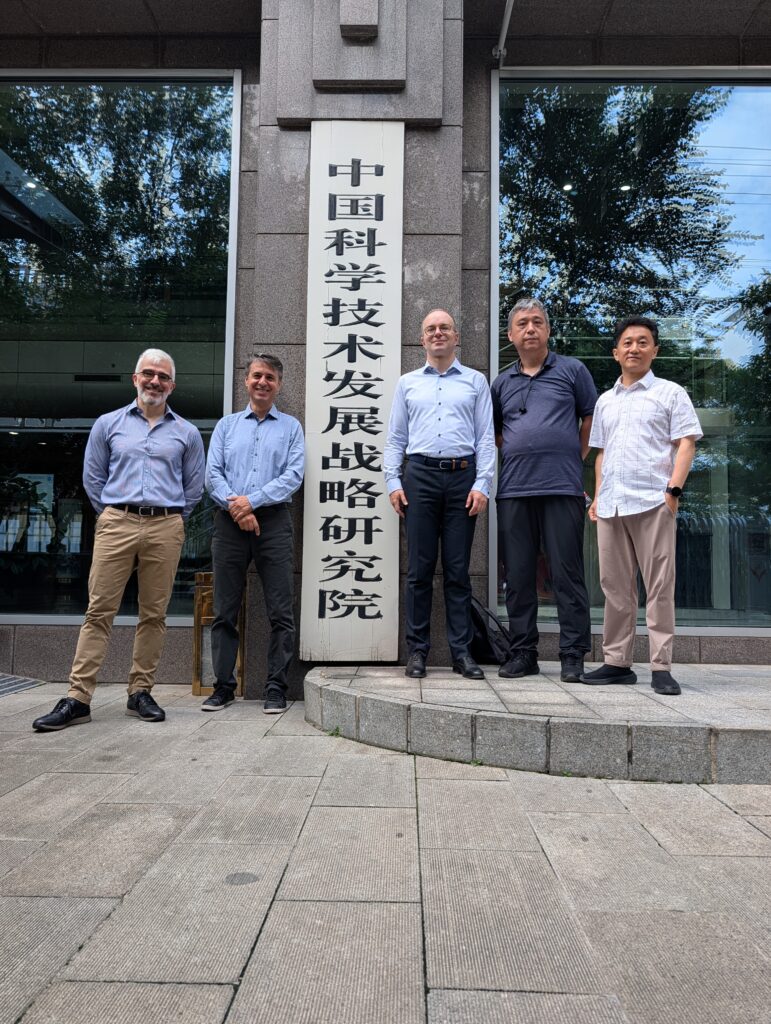
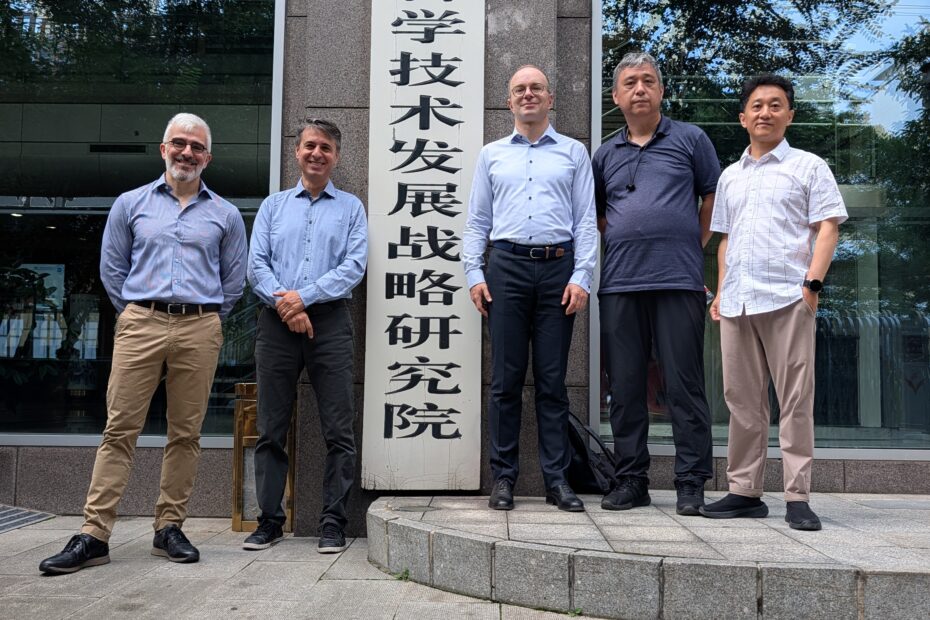
On 18 August, Miltos Ladikas and Alexei Grinbaum (CEA) attended a workshop on “Science and Technology Ethics and Research Integrity” at the Chinese Academy of Science and Technology for Development (CASTED) in Beijing. The workshop focused on the change in scientific practices brought about by AI. AIOLIA’s operational ethics workflow was presented to leading professors in AI ethics from Tsinghua and Renmin Universities.
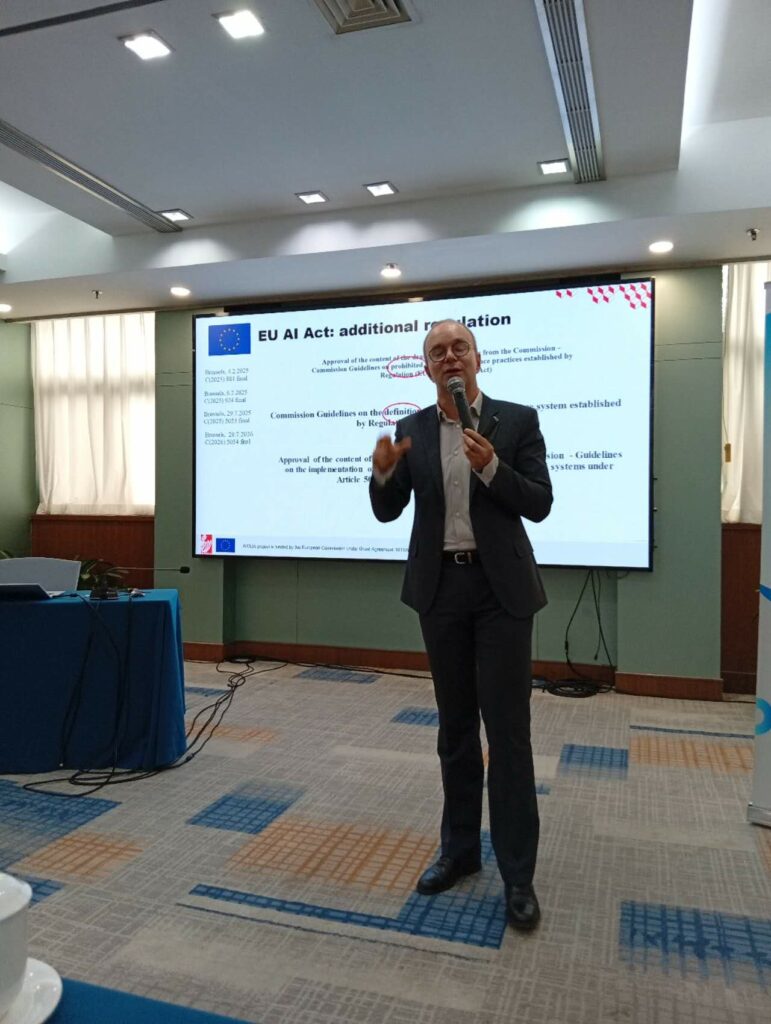
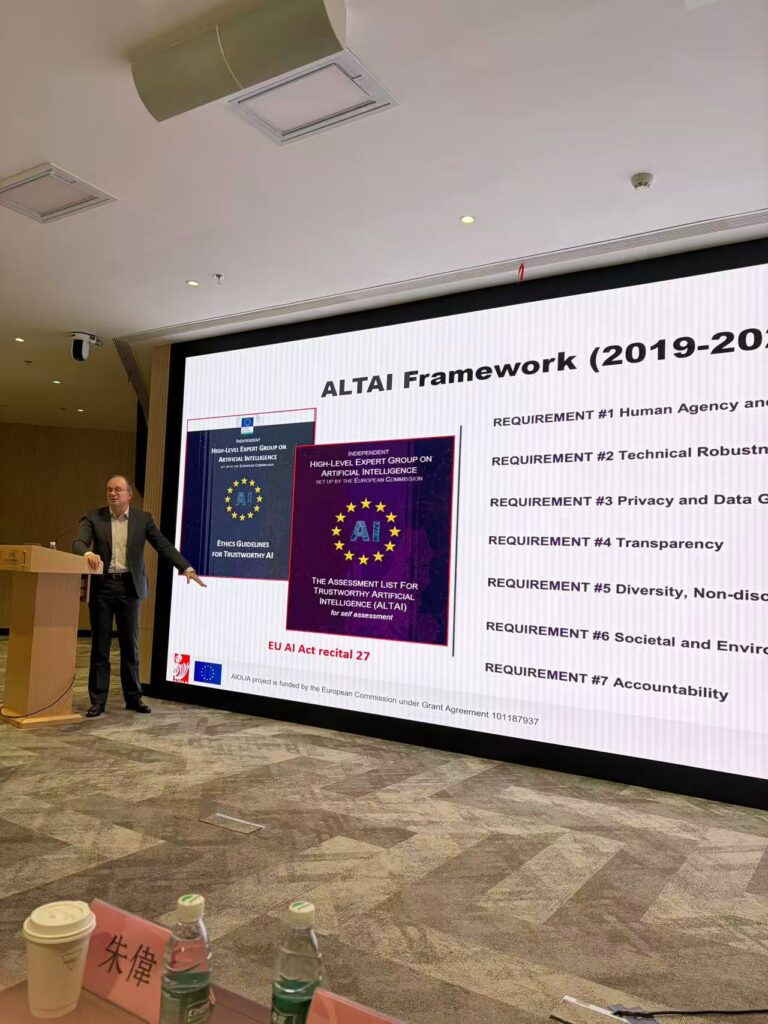
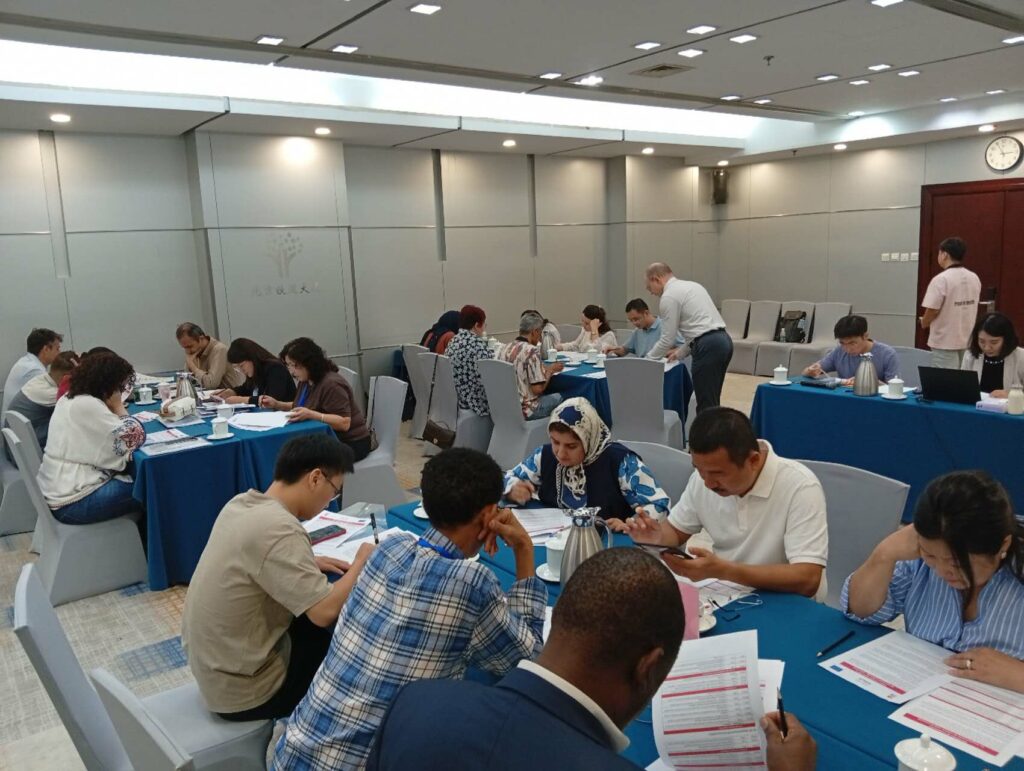
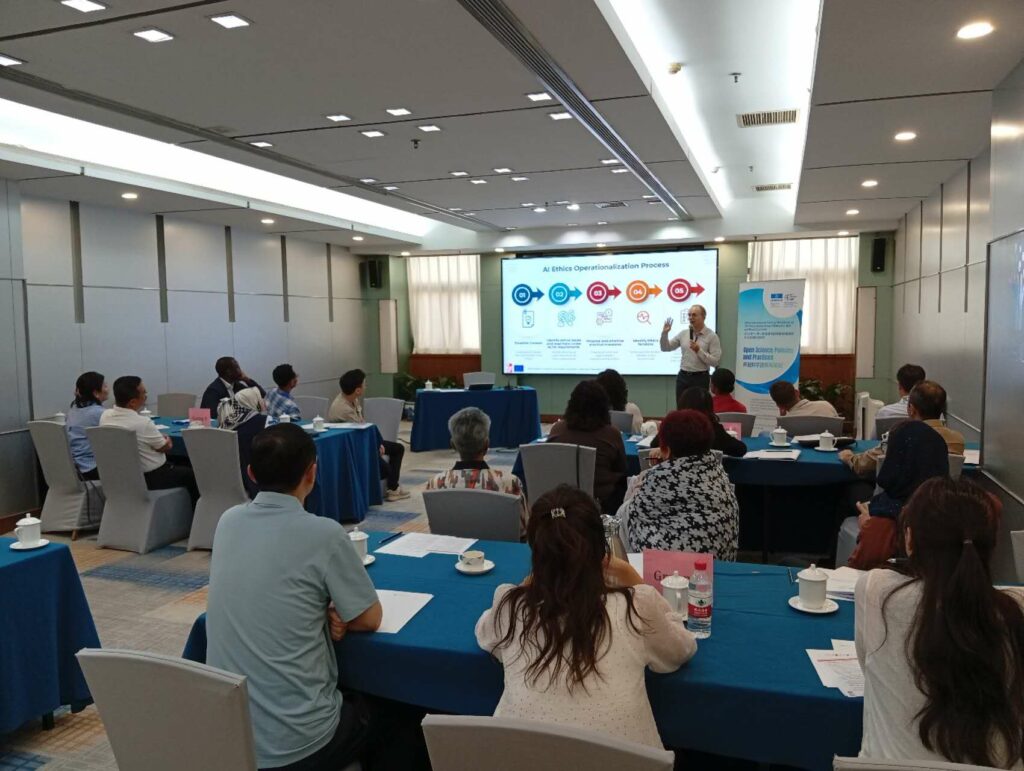
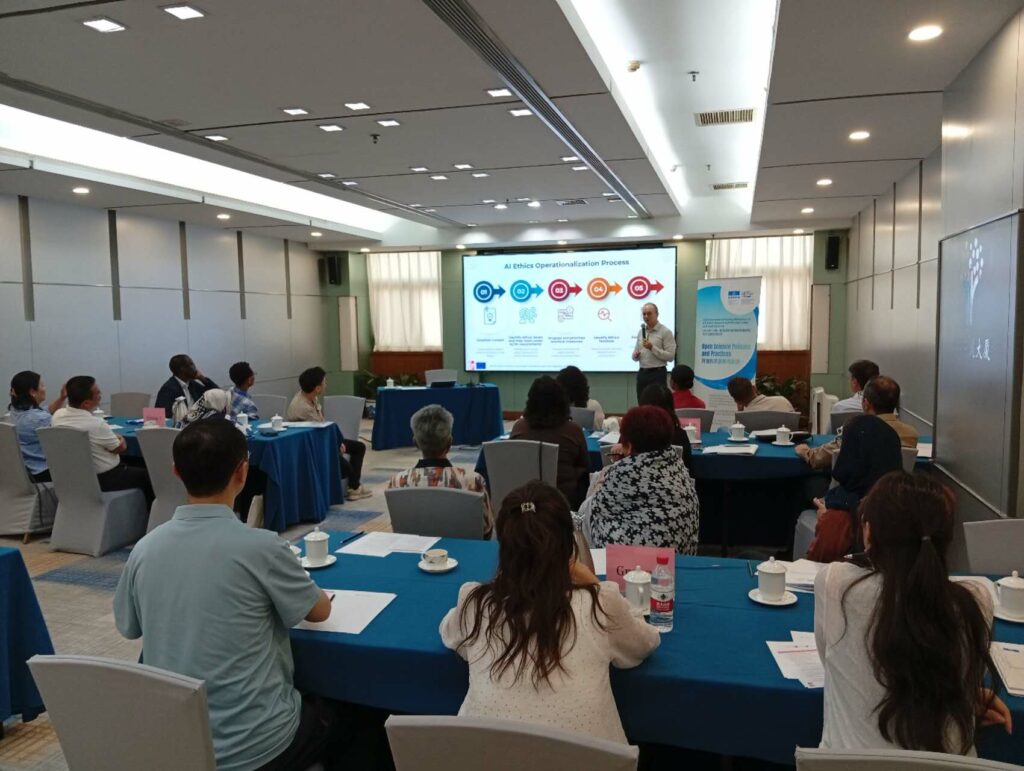
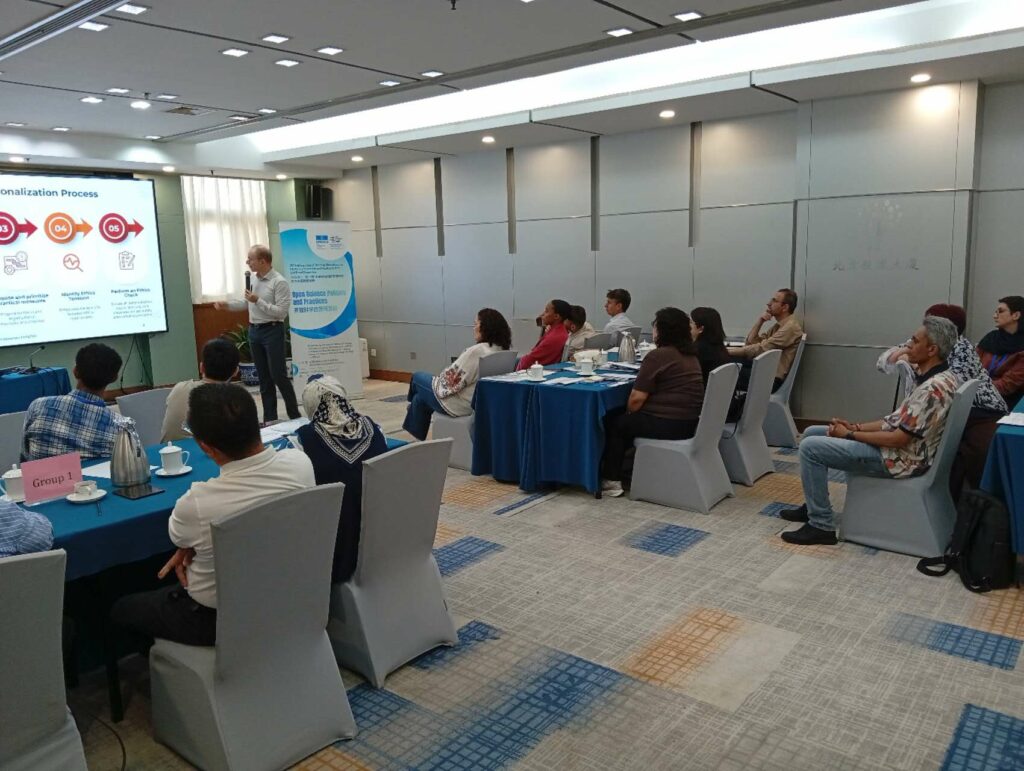
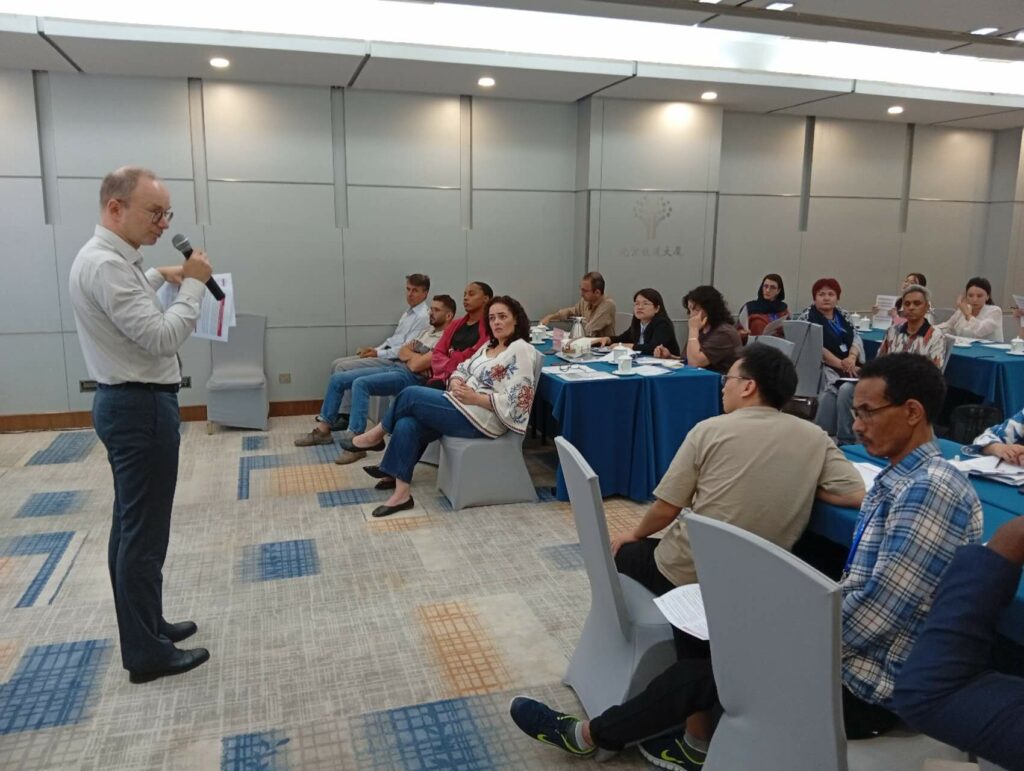
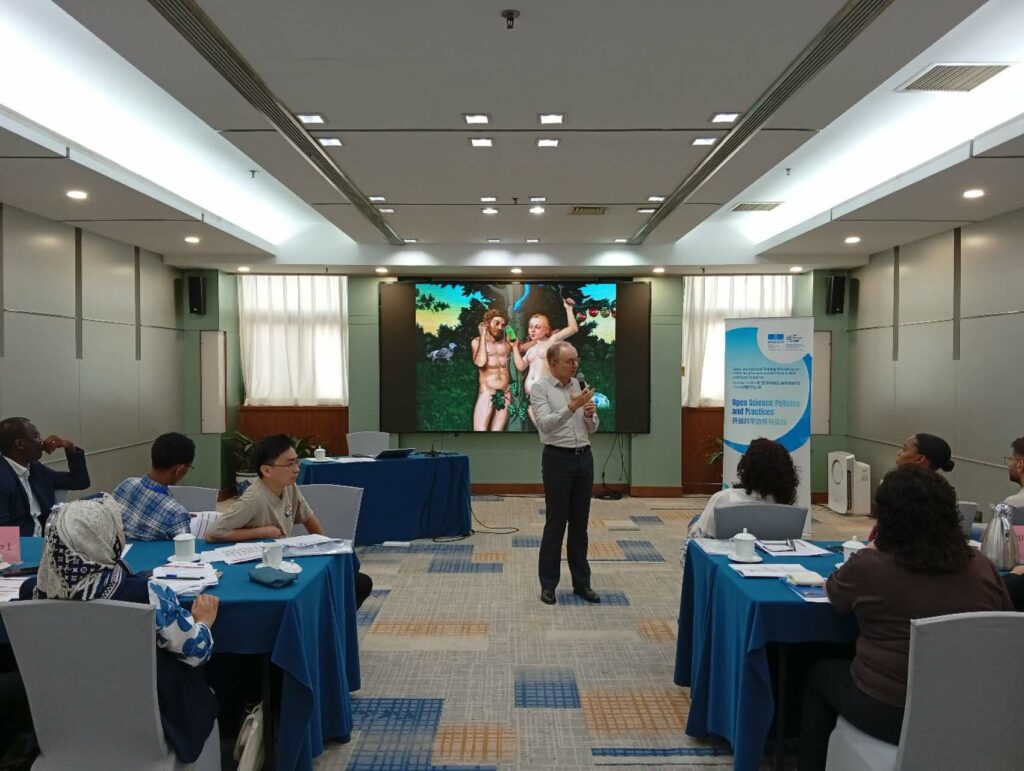
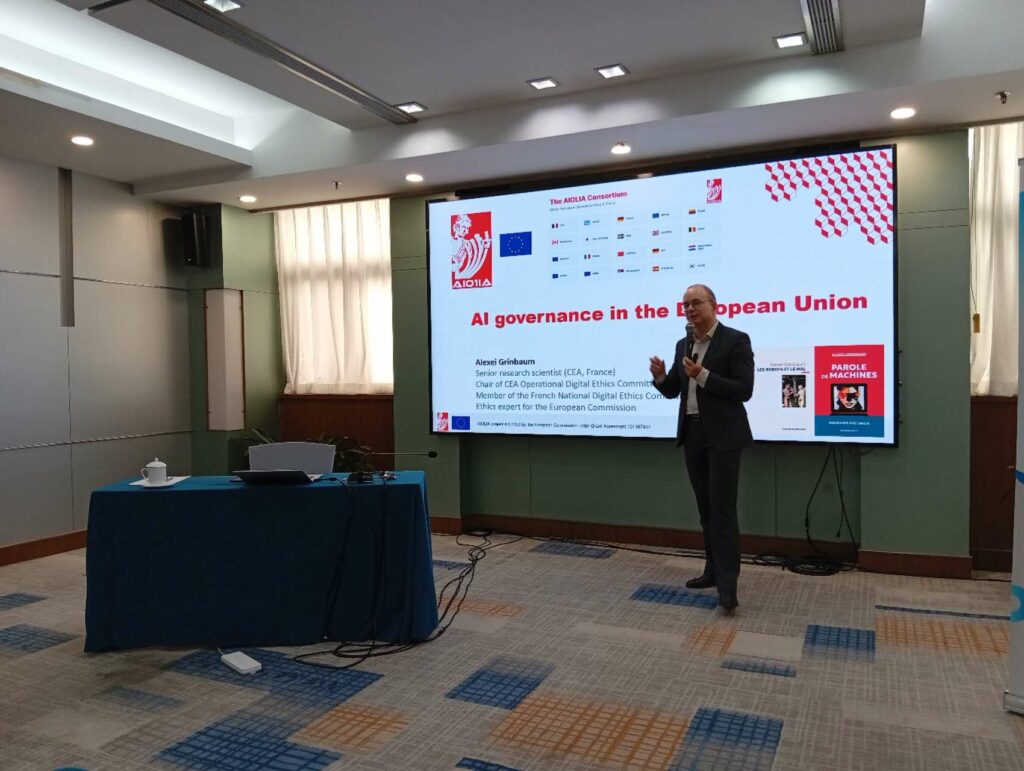
On 20 August, Alexei Grinbaum and Miltos Ladikas led an “AIOLIA day” at the UNESCO/CISTRAT international training workshop “Open Science Policies and Practices”. The workshop was intended for an international audience of science policy-makers and attended by 18 participants from China, Ethiopia, Brazil, Mongolia, Syria, Jamaica, Uzbekistan, South Africa, Iran, Vietnam, and Botswana. Dr Ladikas opened the AIOLIA day with a presentation of EU ethics governance and the Ethics Appraisal Scheme. Dr Grinbaum then presented AI governance in the European Union, including the AI Act, AI in Science Strategy, the ALTAI framework and its operationalization in AIOLIA. In the afternoon, workshop participants took part in a 3-hour AIOLIA training on “Practical AI ethics workflow”, working on exercises based on the AIOLIA use cases 1, 3, and 5. They used the AIOLIA Ethics Issues Checklist and Measures Portfolio to find practical solutions in ethically complex situations and, as policy-makers, gained a first-hand experience of the ethics-by-design workflow on concrete examples.
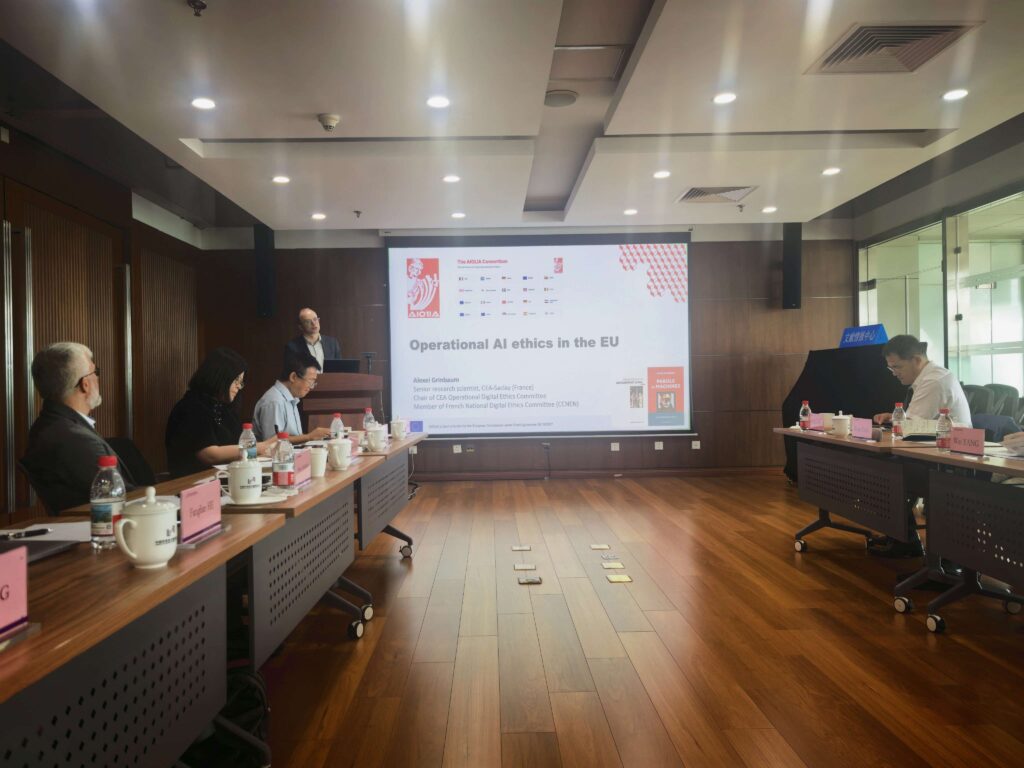
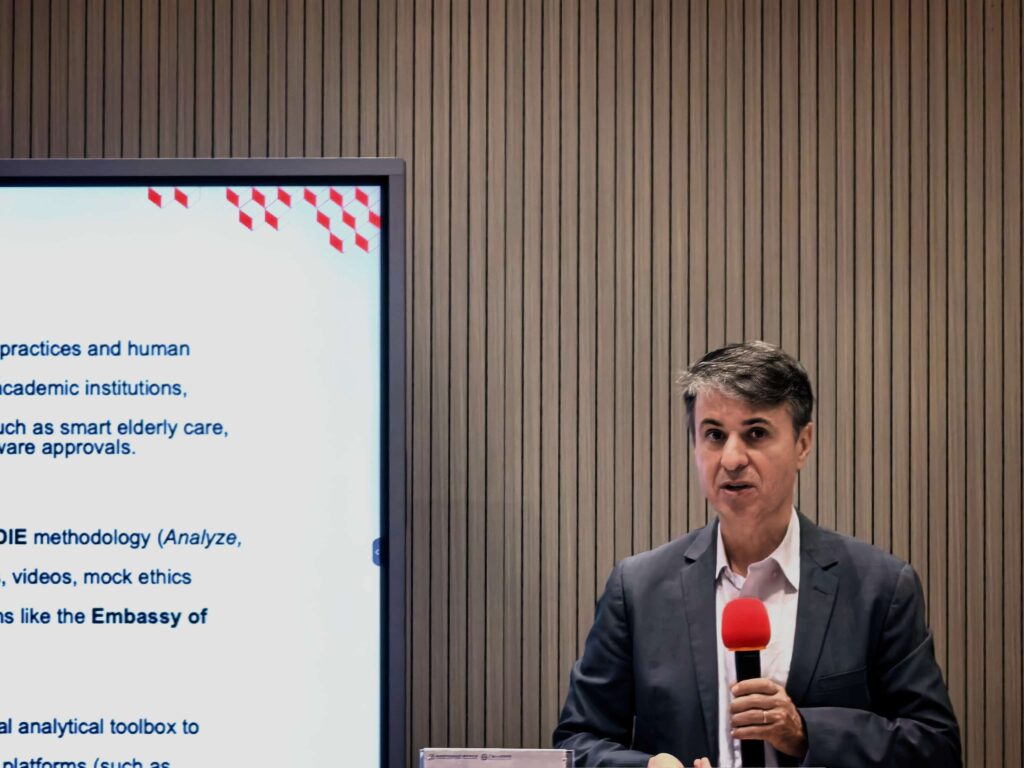
On 21 August, Alexei Grinbaum and Miltos Ladikas participated in the Seminar on Open Science, Research Integrity, and Reproducibility of Research Findings at the National Science Library of Chinese Academy of Sciences in Beijing. Alexei Grinbaum presented operational AI ethics in the EU and the AIOLIA operational workflow during a panel discussion on the role of AI in scientific practice and research integrity. The Ethics Readiness Tool attracted a lot of attention. An interesting discussion followed, including an exchange on the role of AI in research with Academician Wei Yang who attended the seminar.
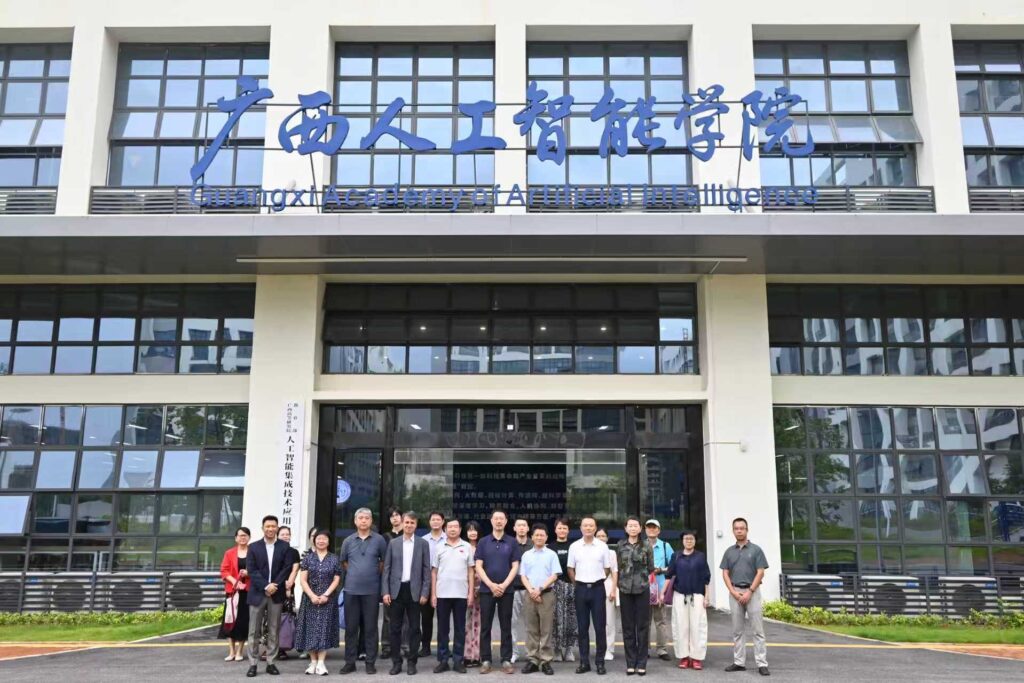
On 24 August, Miltos Ladikas participated in the workshop on “International Dialogue on China-ASEAN Artificial Intelligence Ethics Governance Policy Toolbox” at the Guangxi Academy of Artificial Intelligence in Nanning. Dr Ladikas gave a presentation on AIOLIA’s approach to AI ethics operationalisation and discussed issues surrounding international collaboration on AI ethics and governance. The workshop brought together Chinese AI governance and ethics experts from Guangxi-based institutions such as Guangxi University of Science and Technology, as well as colleagues from CASTED and Renmin University. Among many issues of interest for AIOLIA, the idea of offering training for officials from the ASEAN countries was discussed with the organisers of the China-ASEAN exchange forum.
On 25 August, Alexei Grinbaum gave a presentation on “AI ethics in practice” at the Jiao Tong University Global College in Shanghai. AIOLIA’s practical steps for researchers and engineers provoked an interesting debate with Jiao Tong University’s philosophers of technology and computer scientists, including many students. Questions covered the topics like AI ethics tensions and practical barriers for implementing the AIOLIA ethics-by-design workflow in research. One interesting exchange with Shanghai scientists focused on the need to move away from apocalyptic visions of AI toward practical steps in AI design.
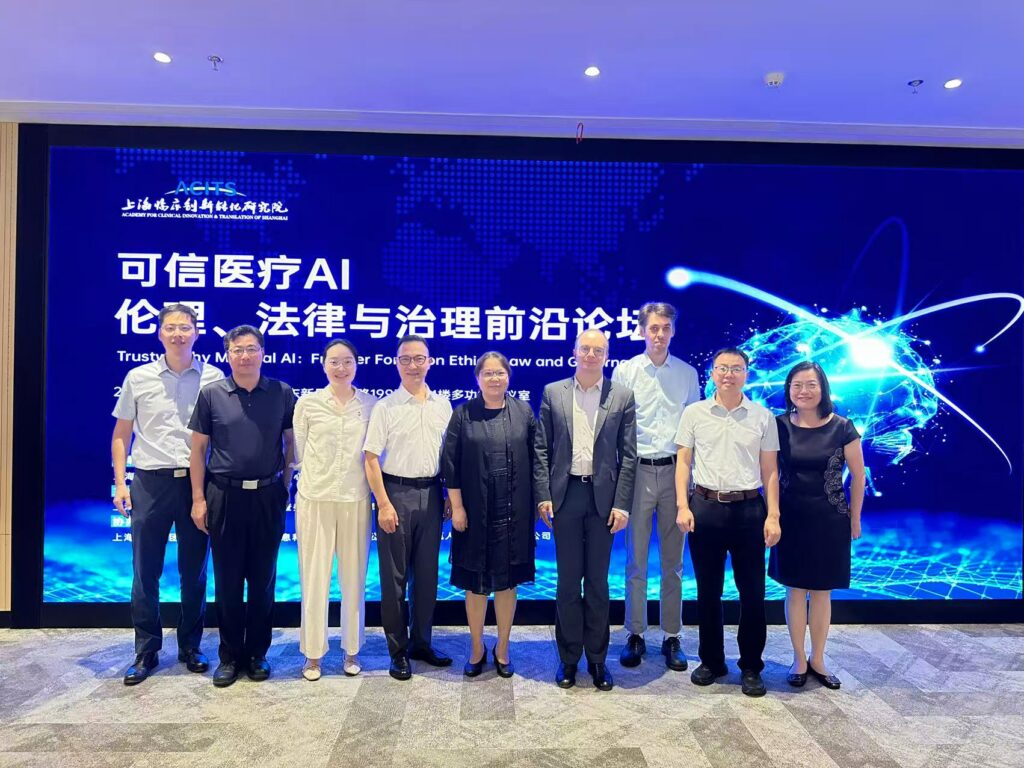
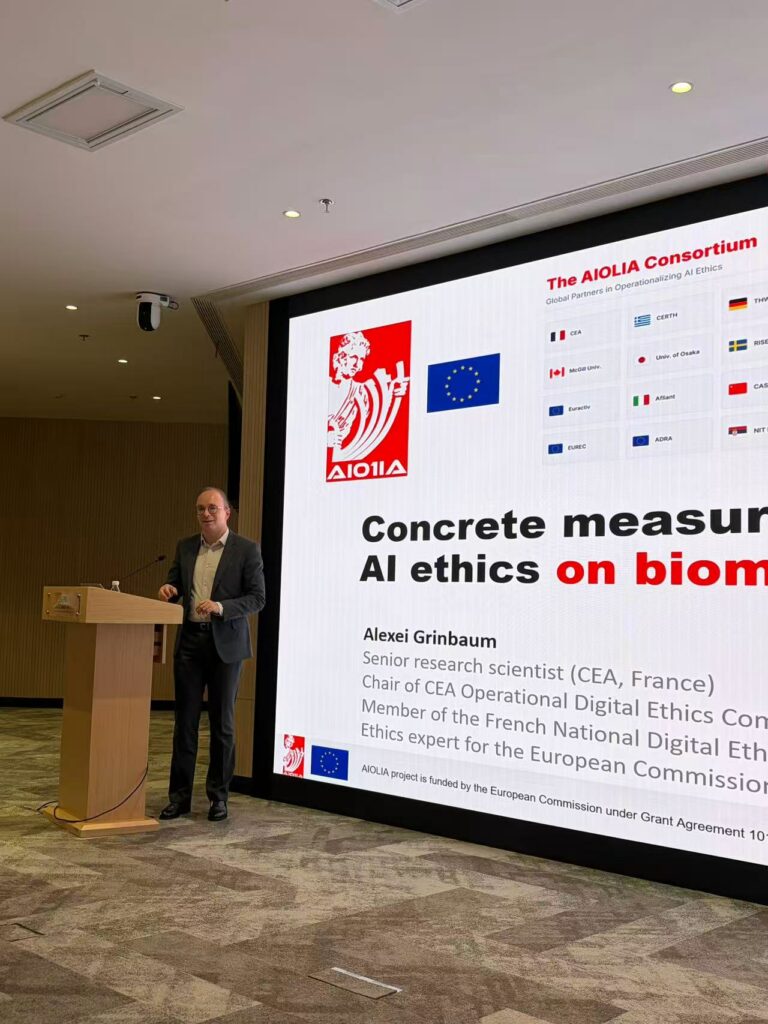
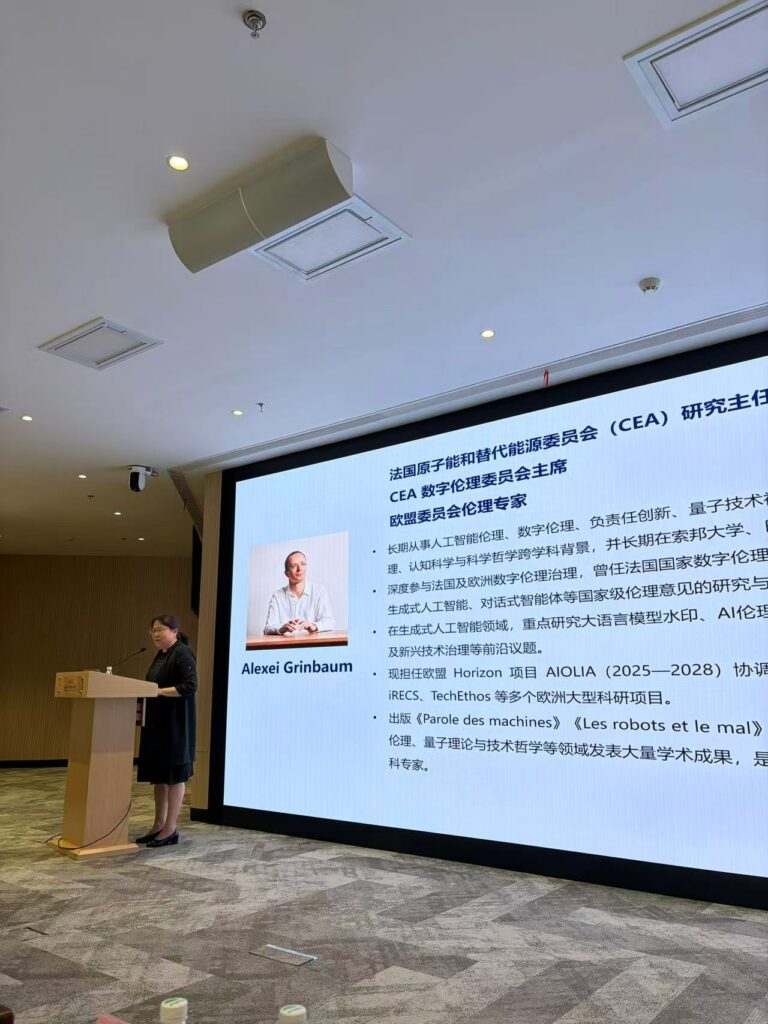
On 26 August, Alexei Grinbaum was invited by Fudan University to give a talk on “Concrete measures to operationalize AI ethics” using biomedical examples. This presentation was part of the “Trustworthy Medical AI: Frontier Forum on Ethics, Law, and Governance” at the Academy for Clinical Innovation and Translation Shanghai. The presentation targeted members of Research Ethics Committees and resonated with two talks by Chinese colleagues from Beijing and Shanghai covering the influence of AI on biomedical research ethics in China. The ensuing debate allowed to envisage future collaboration on AI ethics, including concrete use of AIOLIA’s Measures Portfolio in the work of Chinese RECs.